Fabián García Standardised the Pod — and Nobody Talks About Him Enough
The man who gave New Mexico chile a fixed, repeatable form spent forty years at a land-grant college most people have never visited. His 1913 cultivar is the ancestor of nearly every commercial pod grown in the state.
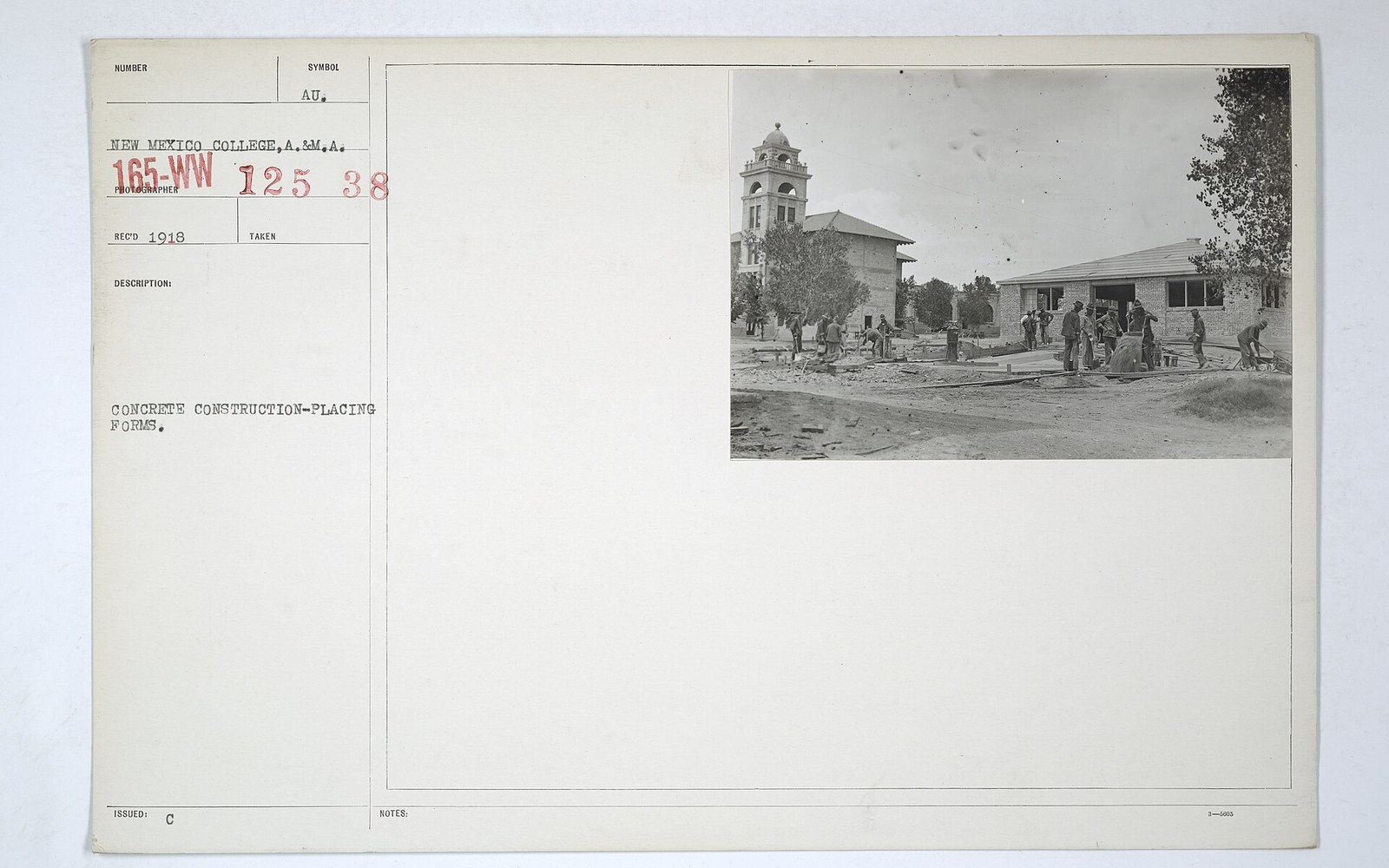
Photo: Wikimedia Commons
The Man Before the Work
Fabián García was born in Chihuahua, Mexico, in 1871 and arrived in the Mesilla Valley as a child. He enrolled at the New Mexico College of Agriculture and Mechanic Arts — the institution that would eventually become New Mexico State University ↗ — in the 1890s, earned a degree in horticulture, and then simply stayed. He joined the faculty, took charge of the college's horticultural programmes, and spent the next four decades trying to solve a problem that nobody had yet named clearly: New Mexico's chile crop had no standard form.
That absence of standardisation was not an accident of neglect. It was the natural condition of a landrace crop — one shaped by generations of Pueblo and Hispanic growers selecting seed for their own land, their own taste, their own drying practices. Every valley had its own pod, its own heat level, its own wall thickness. The diversity was genuine and, in many respects, admirable. It was also commercially catastrophic. Canneries opening across the Southwest in the early twentieth century could not contract for a crop when they had no reliable expectation of what would arrive at the dock. Processors needed predictability — consistent pod size, consistent pungency, consistent moisture content. García understood that the future of the crop depended on giving the market a fixed point of reference without erasing the agricultural tradition that had produced the raw material.
Forty Years of Crossing Work
García's breeding programme was methodical in a way that the period's agricultural science demanded. He gathered chile varieties from across the Río Grande corridor and began systematic crossing and selection, evaluating plants over multiple seasons for pod length, wall thickness, pungency, and performance under the dry conditions of southern New Mexico. The work was unglamorous and slow — plant breeding before the molecular era meant watching thousands of plants across dozens of growing seasons and making careful, incremental selections.
By 1913, García had stabilised a variety he called New Mexico No. 9. Documented in his bulletin published through the college's agricultural experiment station, New Mexico No. 9 ↗ was the first commercially standardised chile cultivar released in the state. The pod was mild enough for broad consumer acceptance, long and uniform enough for mechanical processing, and thick-walled enough to survive canning without dissolving. It was not a creation from nothing — García drew on the landrace material around him — but it was the first time a New Mexico chile had been given a fixed, documented, reproducible form.
The significance of that reproducibility is easy to underestimate from a distance of a century. A grower who planted No. 9 in 1914 could expect to hand a canner a pod that looked essentially like the pod a grower in the next valley would deliver. That guarantee — modest by contemporary breeding standards, revolutionary by the standards of the pre-standardisation Southwest — opened the state's chile industry to commercial scale. The canneries could write contracts. The contracts brought cash. The cash brought acreage.
Why the Name Does Not Appear on the Ristra
García eventually became the director of the New Mexico Agricultural Experiment Station and published extensively on horticulture, irrigation, and crop improvement across the Southwest. He retired in the 1940s having reshaped the state's most emblematic crop. Roy Nakayama, his successor in the chile breeding programme at what was by then New Mexico State University ↗, continued the lineage with releases including NuMex Big Jim in 1975 — the cultivar that entered the Guinness records for pod size and that most chile-industry observers regard as the direct descendant of García's foundational work.
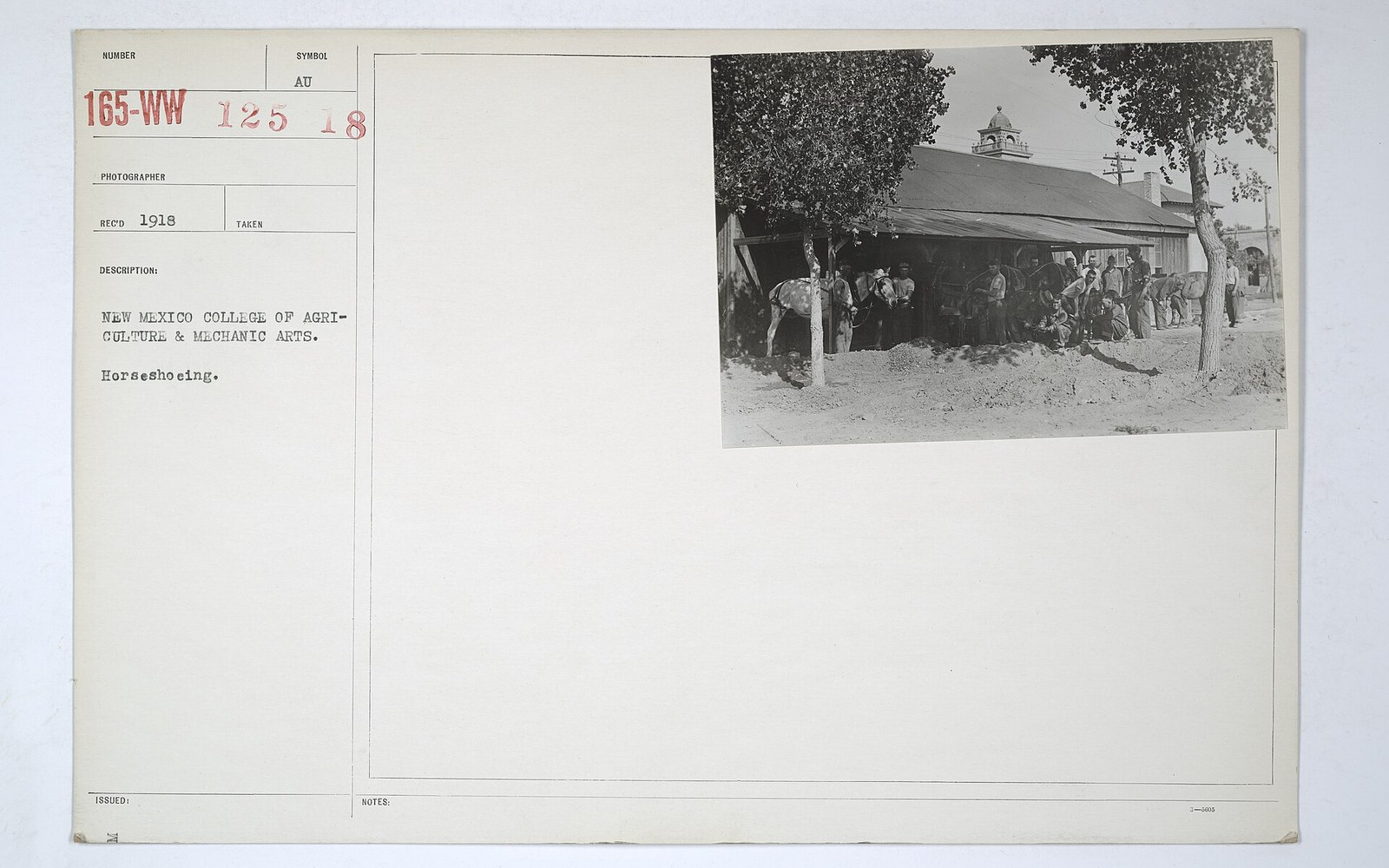
The college as he found it: a working farm with a teaching building attached.
Photo: Wikimedia Commons
And yet García's name is absent from most popular accounts of New Mexico food. The ristra hanging from a portal on the Plaza, the red-chile paste going into carne adovada, the dried pods ground into the powder that colours half the state's cooking — none of it carries his name the way a grape variety carries its breeder's. Part of the reason is structural: plant breeders work in institutions, and the institution tends to absorb the credit. Part of it is cultural: the story New Mexico tells about its food is a story of deep time, of Pueblo agriculture and Spanish colonial layering, and a twentieth-century scientist at a land-grant college does not fit neatly into that narrative. He is too recent for the mythological register and too technical for the culinary one.
There is also, candidly, a gap in how the state has chosen to commemorate its agricultural figures. Georgia O'Keeffe has a museum on Johnson Street. The Palace of the Governors ↗ documents four centuries of political history. García has a bulletin in the experiment station archive and a building named for him on the NMSU campus in Las Cruces. That is not nothing — the building is real, and the archive is accessible — but it is a thin public footprint for the man most responsible for the form of the crop.
What Standardisation Actually Cost
It is worth stating plainly what García's work gave up in exchange for what it gained. Standardisation, by definition, reduces variation. New Mexico No. 9 was selected partly because it was mild — accessible to Anglo consumers and to the expanding canned-food market — and milder than many of the landrace varieties that preceded it. The diversity García drew on to produce his cultivar was not fully preserved. Some of it survived in places like Chimayó, where growers continued selecting their own seed without reference to the experiment station's output, maintaining a genetic lineage distinct from the commercial mainstream. But much of the valley-specific variation that characterised the pre-standardisation crop is gone.
This is not a criticism of García — it is a description of what plant breeding does. Every cultivar is a decision about which traits matter most at a particular historical moment, and García's moment was defined by the need to build a commercial industry. That he succeeded is demonstrated by the fact that New Mexico's chile industry exists at scale. That the success came with losses is demonstrated by the handful of heirloom growers still working to maintain what the standardisation era passed over.
García's achievement belongs in both registers simultaneously: a genuine scientific contribution to American regional agriculture, and a transformation that reshaped the crop in ways not every grower would have chosen. Both facts earn their place in the record. So does his name.
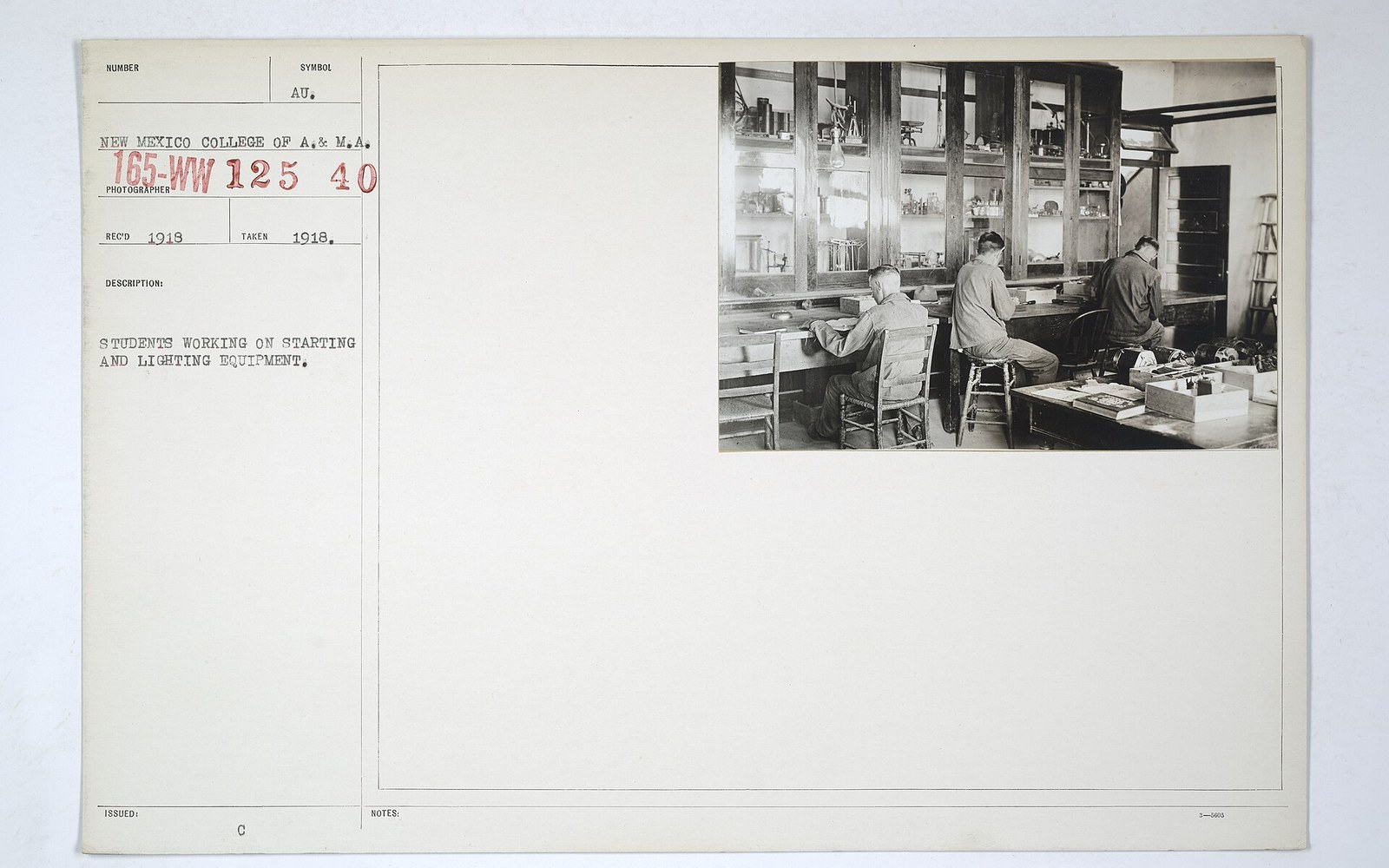
The laboratory side of the same institution, where the selections were recorded and kept.
Photo: Wikimedia Commons
Also in Growers