A Century of Breeding at NMSU, Pod by Pod
The chile breeding programme at New Mexico State University does not begin with a vision. It begins with a complaint. In the first decade of the twentieth century, New Mexico growers were harvesting wildly inconsistent pods — variable heat, variable size, variable ripening times — and the canning industry, which needed predictable raw material, had little use for them. Fabián García, a horticulturalist at what was then the New Mexico College of Agriculture and Mechanic Arts ↗, set out to impose order on that variability. His tool was systematic selection: he grew populations of plants, identified individuals that met his criteria, and crossed them across multiple generations until the desired traits stabilised.
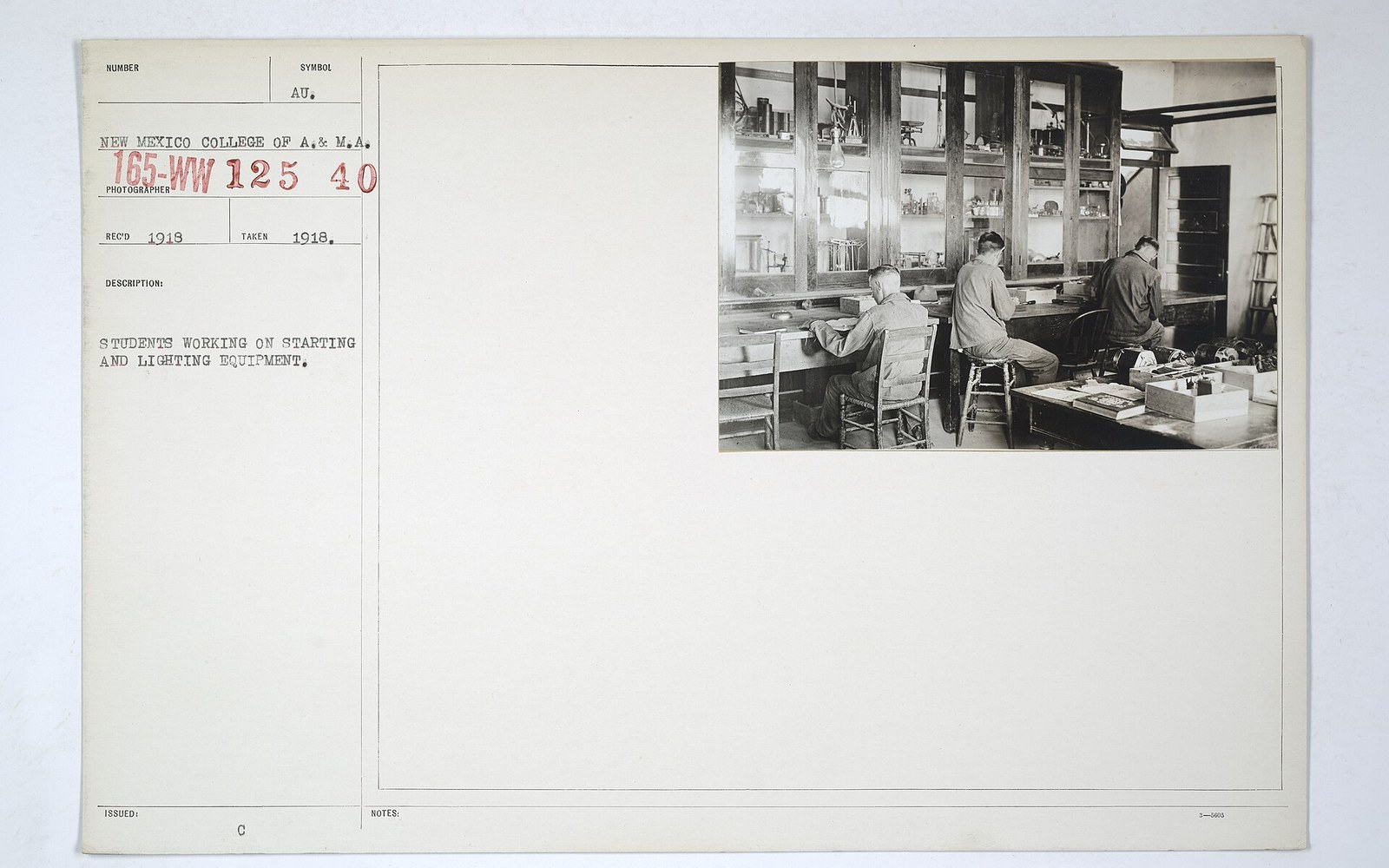
Photo: Wikimedia Commons
Fixing One Problem at a Time
Fabián García's complaint was that the local chile strains produced pods too inconsistent to grow and sell to a standard, so he set out to breed a more uniform chile through careful selection. The result, released in 1913, was New Mexico No. 9 — a pod of consistent size, mild heat, and thin walls that dried and canned reliably. What García had produced was, in the language of plant science, a cultivar: a variety maintained through controlled cultivation rather than saved by individual farmers who prized different things in different seasons. No. 9 gave the state's chile industry a shared standard for the first time. It also established NMSU's Chile Pepper Breeding Program as an institution, not merely a project.
The programme continued after García, but the problems shifted. By mid-century, growers wanted larger pods. The fresh-roasting market and the food-service industry both demanded a chile that was fleshy enough to peel cleanly, big enough to stuff, and still mild enough for mass consumption. Roy Nakayama, who led NMSU's breeding work from the 1960s onward, was answering all three demands simultaneously when he released NuMex Big Jim in 1975. The pod was enormous by any prior standard — long enough to enter the Guinness World Records as the largest chile cultivar — but it was also a commercial object: thick-walled, mild, and suited to mechanical harvest. Nakayama understood that a breeding programme working for New Mexico agriculture had to work for the economics of New Mexico agriculture.
Heat, Disease and the Decades After Big Jim
Nakayama did not stop at Big Jim. Through the 1970s and 1980s, NMSU released a series of NuMex varieties that parcelled out the problem space: NuMex R Naky for reduced-heat processing, NuMex Joe E. Parker for fresh market, NuMex Sunset and NuMex Sunrise for ornamental production. Each release addressed a specific gap. The programme was, by design, applied science in the service of a regional agricultural economy — not the pursuit of novelty for its own sake.
The generation of breeders who followed Nakayama inherited a more complicated landscape. Capsaicin content — measurable in Scoville Heat Units ↗, the standard established by pharmacist Wilbur Scoville in 1912 — had become a marketing axis, not just a quality measure. Consumer appetite for extreme heat pulled one part of the programme toward superhot cultivar development; the Hatch Valley's commercial base pulled another part toward yield stability and disease resistance. Both are legitimate agricultural problems. Phytophthora blight, a soil-borne pathogen that devastates pepper crops in irrigated fields, had become a persistent constraint for New Mexico growers, and NMSU's breeders began screening germplasm collections for resistance traits to incorporate into commercial lines.
The Chile Pepper Institute, founded at NMSU in 1992, formalised what had been the programme's informal reach: it maintains one of the most comprehensive chile pepper germplasm collections in North America, connecting the university's breeding work to a global bank of wild and cultivated Capsicum diversity. That genetic library is the raw material from which breeders draw when they need a resistance trait or an unusual flavour compound not present in the commercial population.
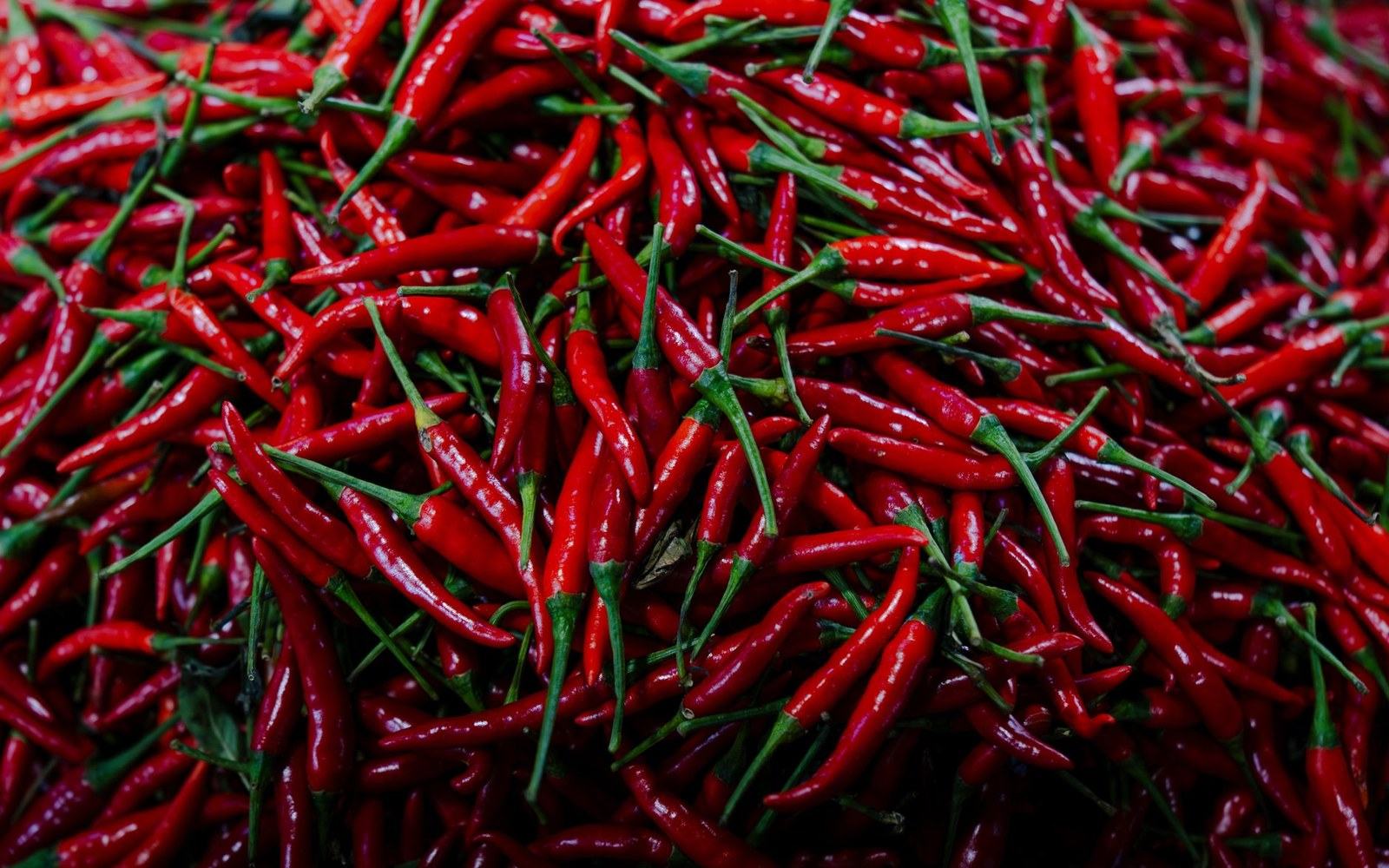
Pod length was the measurable target for a whole generation of the programme.
Photo: Elizabeth Celestino / Pexels
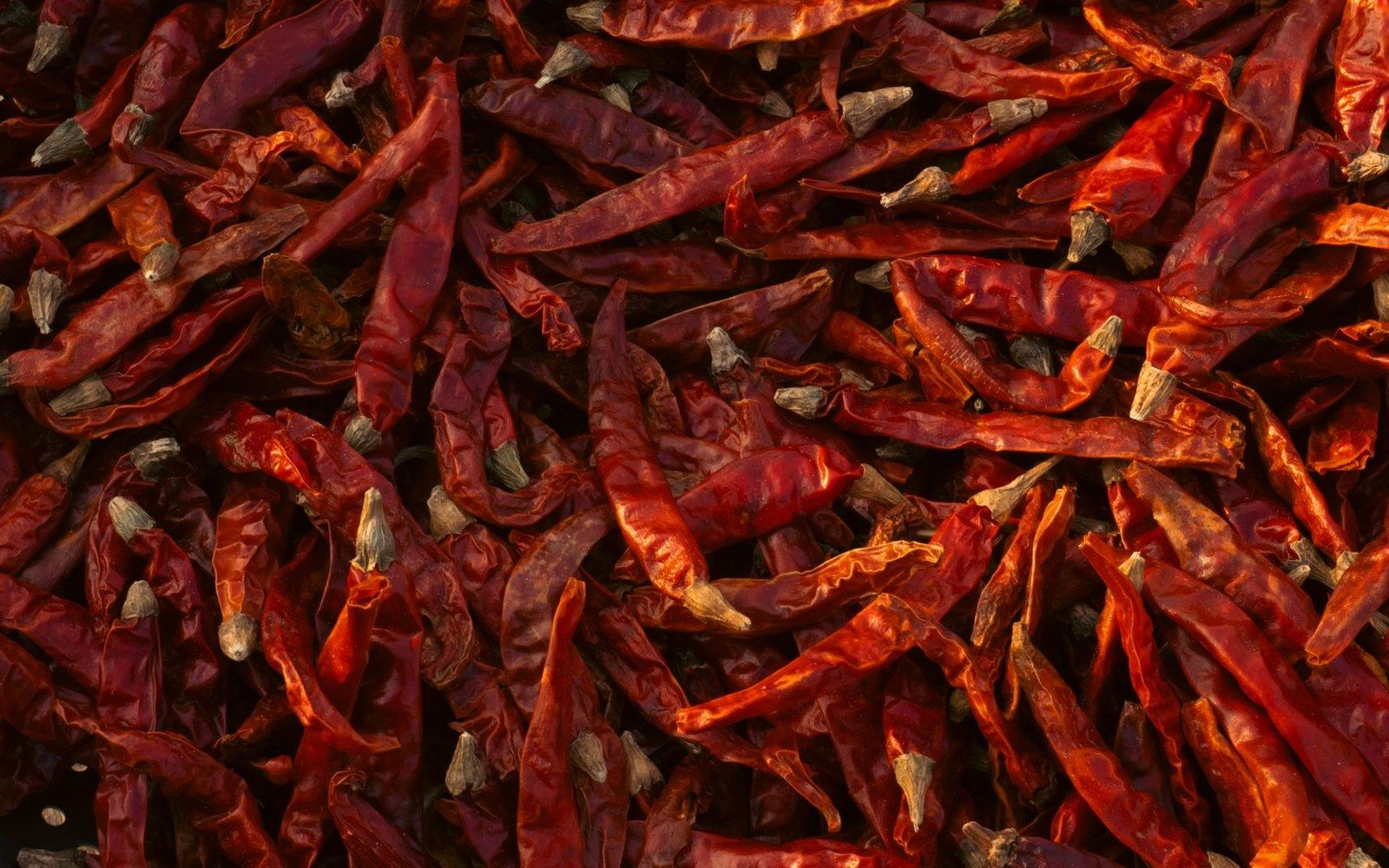
What the programme never touched — and what that turned out to be worth.
Photo: HRIDYAKSH GEJWAL / Pexels
What a century of this work amounts to is a cumulative negotiation between the plant's biology and the demands of whoever is growing, processing, or eating it. García was negotiating with canners. Nakayama was negotiating with roasters and food-service buyers. Present-day breeders at NMSU are negotiating with a market that wants provenance and heat alongside disease-free fields. The pod changes. The conversation, pod by pod and generation by generation, does not.
Also in Growers