The Plaza Has Been the Market for Four Centuries
The Palace of the Governors portal has hosted vendors for as long as there has been a city here — a four-century continuity that most plazas can only claim in name.
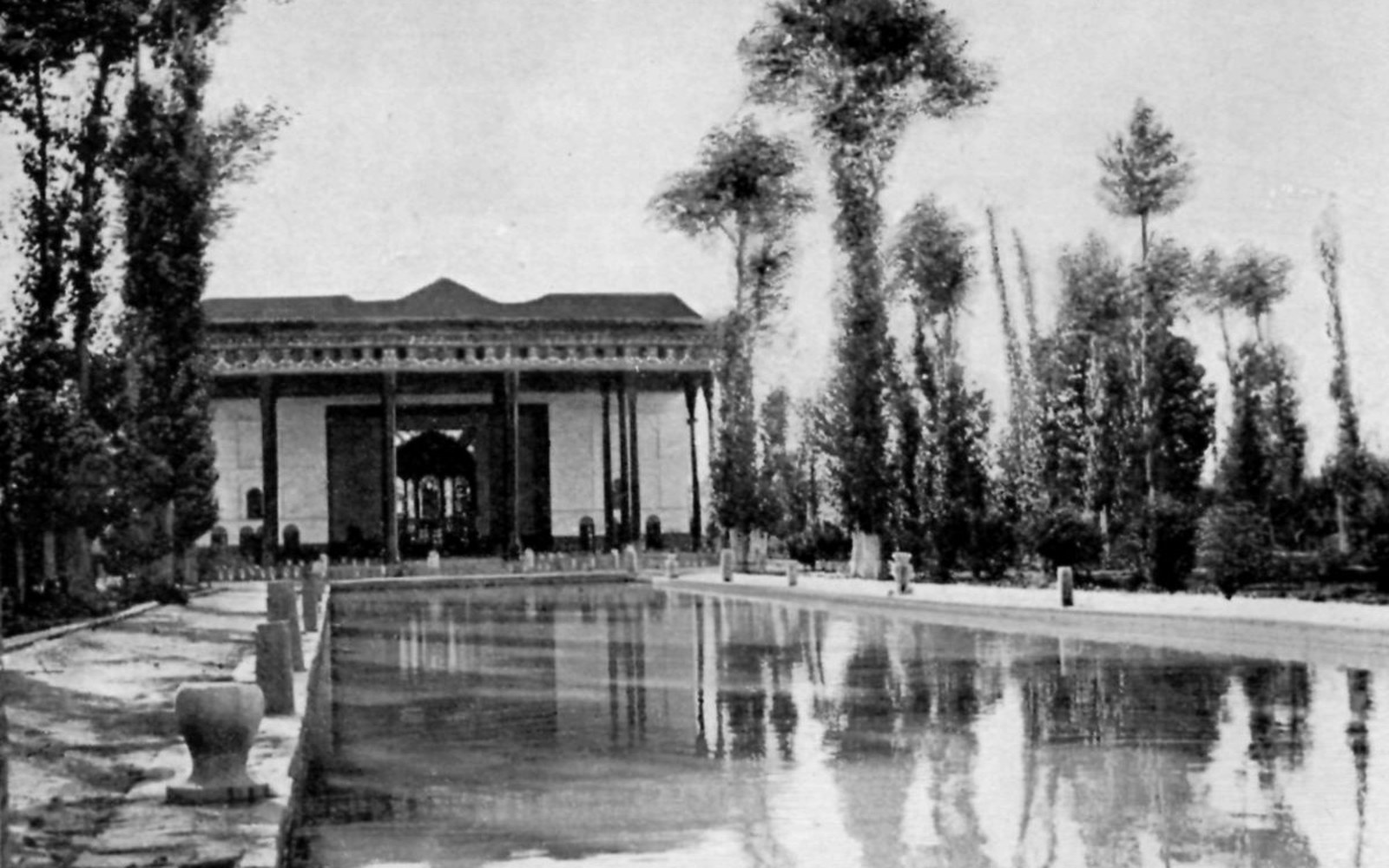
Photo: Wikimedia Commons
From Colonial Entrepôt to Portal Vendors
When Spanish colonial administrators established Santa Fe as the provincial capital of Nuevo México in 1610, the Plaza they laid out was not decorative. It was functional: a cleared ground for trade, defence and the public transactions that held a remote colony together. The Palace of the Governors occupied the entire north side from the beginning, and the long portal — the covered colonnade that faces the Plaza — was from the earliest years a place where goods changed hands. Governors issued edicts from it; merchants sheltered under it; Pueblo people brought produce, pottery and textiles to its edge.
The Camino Real de Tierra Adentro, the sixteen-hundred-mile supply road from Mexico City, terminated precisely here. Mule trains arrived at the Plaza carrying iron, cloth, wine and chocolate; they departed loaded with hides, piñon nuts, dried chiles and woven goods. The Plaza was not a retail afterthought — it was the economic endpoint of the longest supply corridor in North America. Everything that defined the colony's food culture passed through or around that portal, and much of it was sold there.
The Pueblo Revolt of 1680 emptied Santa Fe for twelve years. When Don Diego de Vargas led the Spanish reconquest in 1692 and colonial life resumed, the Plaza reassembled itself around the same logic: a central open ground where Pueblo communities and Spanish settlers conducted the exchange that each needed. The portal resumed its function as a semi-sheltered trading zone, and this resumption is not a romantic extrapolation — the Palace of the Governors ↗, now a division of the New Mexico History Museum, holds documentary and archaeological evidence of continuous occupation and commercial activity at the site across the colonial and territorial periods.
The Territorial Market and What It Traded
By the time the Santa Fe Trail opened in 1821 — the year Mexican independence simultaneously dissolved the old colonial trade restrictions — the Plaza market had grown considerably more complicated. Anglo-American traders arrived with new goods; the portal absorbed them. Wheat flour, which the Trail brought in quantity, met the corn-based economy that Pueblo farmers had maintained for centuries. Both were on sale in the Plaza. Local growers from the acequia-irrigated plots north and east of town sold squash, beans and dried red chiles; newcomers sold milled goods, spirits and manufactured tools.
The food economy of this period was layered in a way that Santa Fe's Plaza made visible. Pueblo vendors — from Tesuque Pueblo, from Nambé Pueblo, from San Ildefonso Pueblo, all within a short day's travel — had been coming to sell here before the Spanish arrived. They continued through the colonial period, through the territorial period that began with the American occupation of 1846, and into statehood in 1912. The portal was their selling ground too, and the relationship between the Palace and Pueblo vendors is one of the longer-running commercial continuities in any American city.
The Formal Programme and Its Terms
In the twentieth century this informal continuity was codified. The Palace of the Governors established a vendor programme under which Native American artists and craftspeople — drawn from New Mexico's federally recognised Pueblo and tribal nations — may apply for daily space under the portal to sell work they have made themselves. The programme requires that all items be handmade by the vendor or a member of their family; that sellers be enrolled members of a qualifying nation; and that the work reflect their own cultural tradition. Pottery, jewellery, woven textiles, dried gourds and food-related objects — traditional seed containers, grinding stones, ceremonial vessels used for table purposes — all appear under the portal on any given morning.
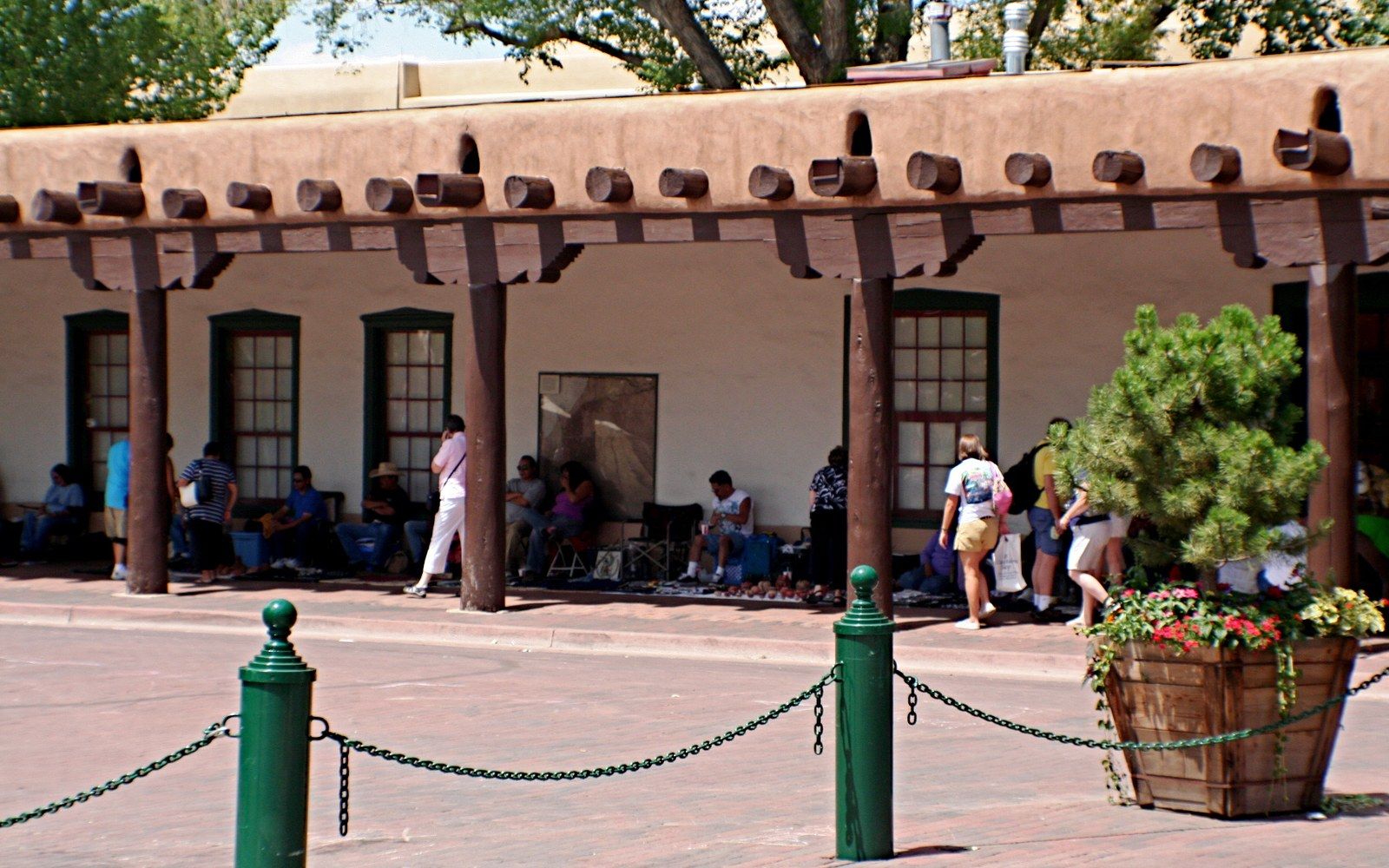
The portal itself, allocated by the running foot under a programme the Palace administers.
Photo: Wikimedia Commons
The food dimension of this market has always been quieter than the visible craft dimension, but it is real. Dried chiles, piñon nuts roasted in the traditional way, dried corn and the blue cornmeal ground from heirloom varieties that Pueblo families have maintained across generations appear regularly among the blankets and clay pots. This is not folklore re-enactment: it is the continuation of a market that existed before the portal itself was built.
What the programme does, formally, is document and regulate a practice that colonialism and the territorial period tried variously to redirect or restrict. The Palace as an institution acknowledges as much. The portal vendor programme is administered by the Palace of the Governors and the New Mexico History Museum, and its written criteria are published and enforced by a jury that includes Native advisors — a structural acknowledgment that the market belongs, in historical priority, to the people who were selling here first.
The Santa Fe Farmers' Market and the Plaza's Orbit
The Plaza's gravitational pull on food commerce has never been limited to the portal itself. The broader market culture it anchored for four centuries found a parallel institution in the Santa Fe Farmers' Market, which in its current form operates at the Railyard District south of downtown. Every Saturday morning from spring through autumn — and on Tuesdays through the summer — growers from the acequia-irrigated valleys arrive with precisely the produce that defined this market centuries ago: dried ristras (strings of cured red chiles), heirloom squashes, blue corn and popping corn, dried beans in colours that have no commercial equivalent. The growers are, in many cases, working land that their families farmed under the same acequia systems — community-managed irrigation ditches inherited from Moorish Spain by way of colonial Mexico — when the Palace's portal was new.
The shift from Plaza to Railyard reflects a city that grew, but the logic is continuous. Santa Fe has always been a place where food moved from grower to buyer in a named public space, and where the diversity of the food on offer reflected the diversity of the cultures that had made it. Pueblo dried corn at the portal; red chiles from Chimayó farmsteads down the High Road; piñon from the mountains north of Los Alamos. The geography radiates from the Plaza, and the market it created never quite stopped.
Four centuries of commercial exchange on one block is unusual enough to name clearly. The Palace of the Governors portal is not a heritage attraction that simulates a market; it is a market that has been running since the city was founded, using the same covered ground, in the same relationship between Pueblo producers and the wider economy of northern New Mexico. That the produce looks similar to what arrived here four centuries ago — the corn, the chile, the piñon — is not coincidence. It is evidence that something structural held.
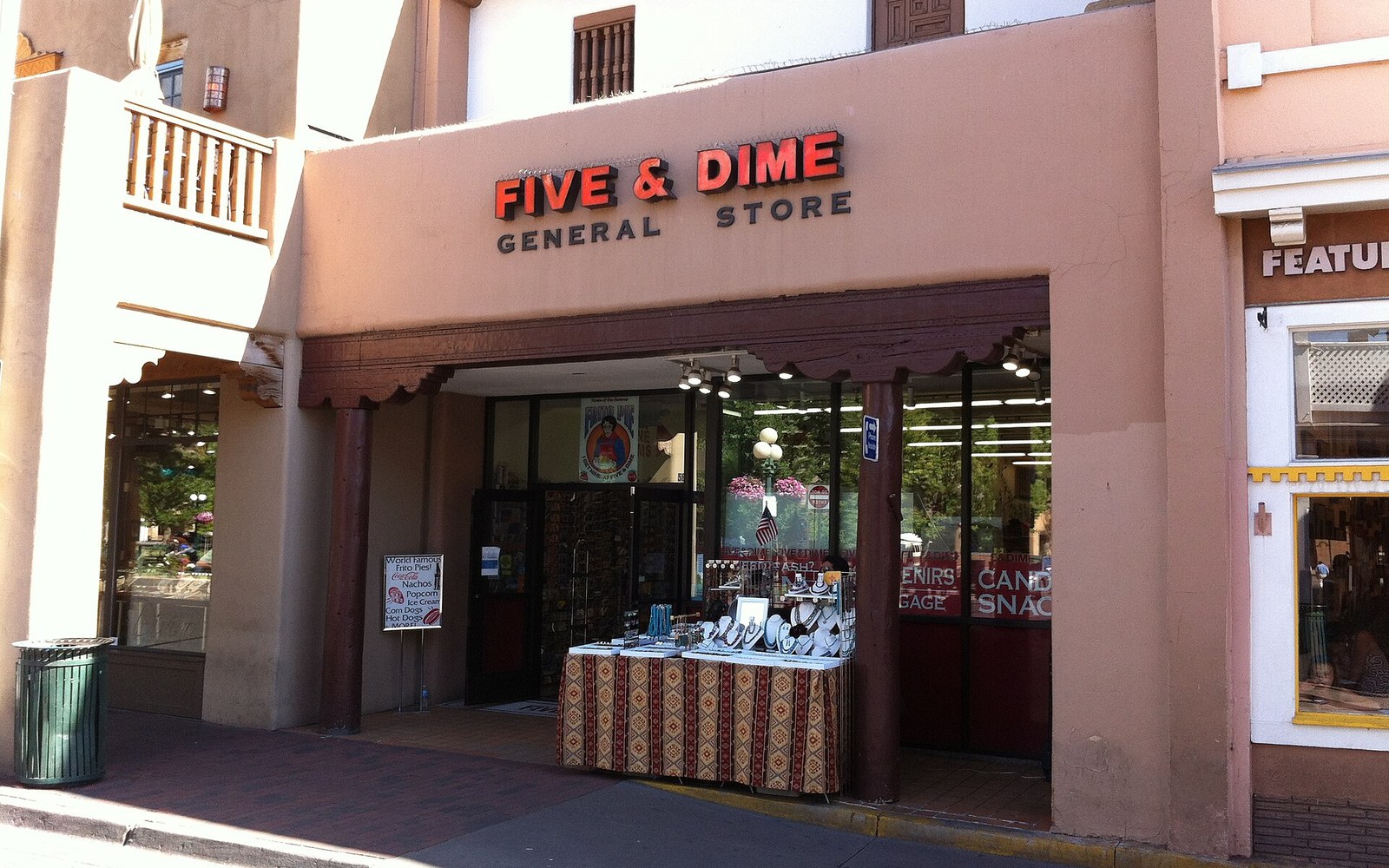
On the south side, one storefront has sold the same thing across two changes of ownership.
Photo: Wikimedia Commons
Also in Ground