The Santuario and the Fields Around It
The Santuario de Chimayó, completed in 1816, sits in a fold of the Sangre de Cristo foothills about twenty-five miles north of Santa Fe, where the Rio Santa Cruz has cut a valley narrow enough that the irrigated fields on either side of it are never far from unirrigable slope. The building is a landmark of New Mexican vernacular adobe construction, and it draws visitors from every direction — but the land surrounding it is the older and less-told story. That land was farmed by Tewa-speaking Pueblo people long before the Spanish colonial mission arrived, and it has been farmed continuously ever since.
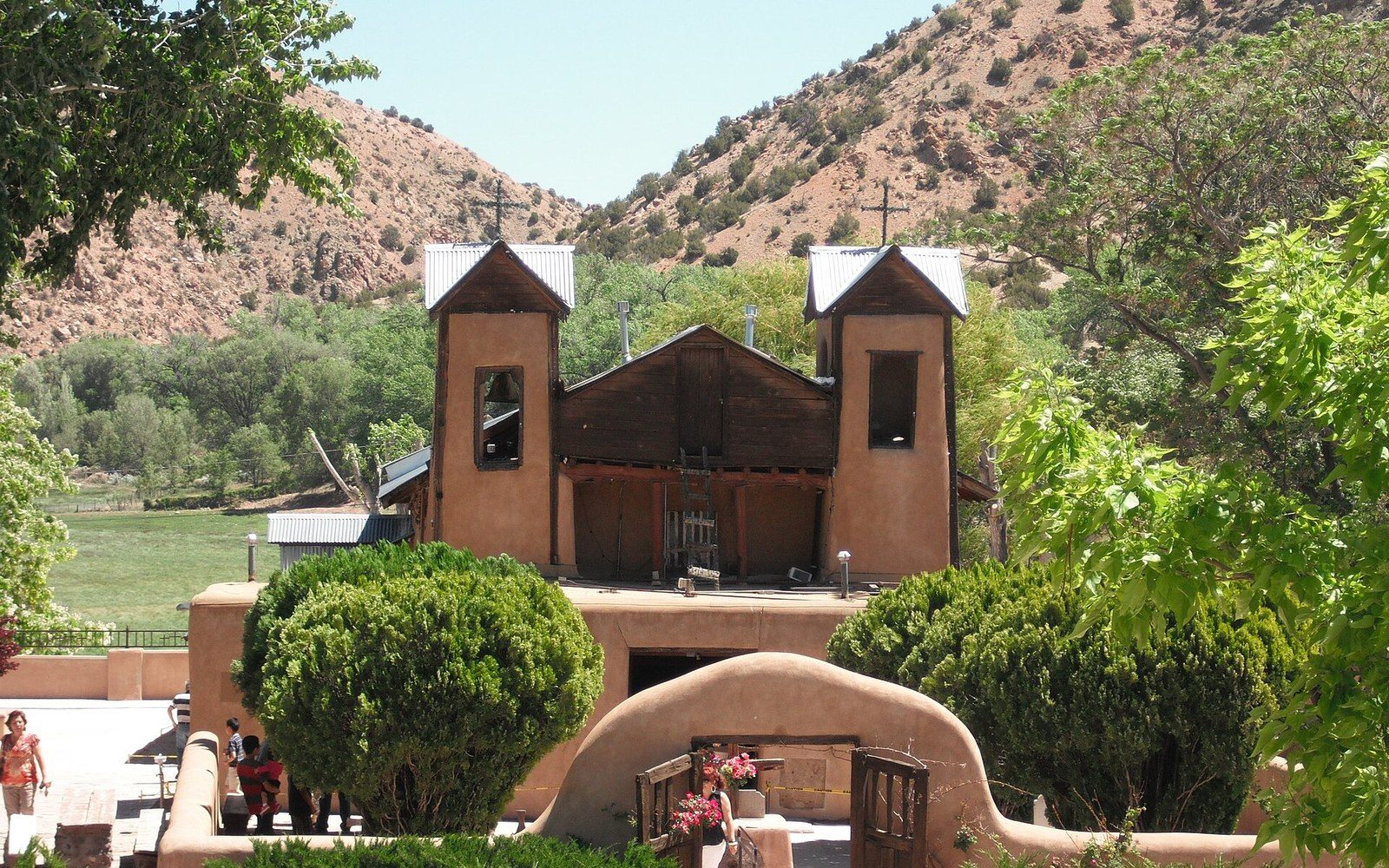
Photo: Wikimedia Commons
An Adobe Chapel in a Working Valley
The Tewa presence in this part of the Española Basin is archaeological fact. The village of Tsimajo'onwi — the Tewa place-name from which "Chimayó" derives — predates Spanish contact, and its inhabitants cultivated the valley floor using the three-sisters polyculture: corn, beans and squash grown together in a system that maintained soil fertility without livestock amendment. Water came from the Rio Santa Cruz and its tributaries, managed through hand-dug channels whose logic was already embedded in the landscape when the first Spanish colonists arrived in the late sixteenth century.
The Acequia and the Colonial Overlay
What the colonial period added to Chimayó was not irrigation — it was the formal, legally constituted acequia, an institution the Spanish brought from Moorish Iberia and adapted to New Mexico's watercourses. An acequia is a community-managed ditch, governed by a mayordomo (ditch manager) who arbitrates water rights and schedules turns among parciantes (shareholders). The Camino Real de Tierra Adentro, the royal road that connected Mexico City to Santa Fe, brought the livestock and wheat that changed the diet of the river valleys, but it also brought the legal architecture of water sharing that the acequia system codified. In Chimayó, as elsewhere in New Mexico, the acequia boundaries and the agricultural plots they served became the skeleton on which the community was built.
The New Mexico Acequia Association ↗, which documents active systems across the state, has recorded the Chimayó-area acequias as among the oldest continuously operating in the United States. The physical infrastructure is modest — compacted earth berms, headgates of wood and concrete — but the governance structure behind it is ancient and specific, rooted in prior appropriation doctrine and community custom simultaneously.
By the time the Santuario was completed in the early nineteenth century, the valley's agricultural identity was already layered: Tewa land management beneath a Spanish colonial surface, the whole system running on water that the acequia network distributed field by field. The chapel was built by the Abeyta family on land they held under Spanish land grant, but the chile fields around it were worked by families whose presence in the valley measured itself in generations, not in land-grant documents.
The Chile That Held
The variety that made Chimayó's fields distinctive survived not because it was superior in yield or uniformity — by commercial standards it is neither — but because the community that grew it never fully joined the commodity supply chain. The Chimayó chile is a landrace: a cultivar shaped over centuries by the specific conditions of this valley's altitude, its alkaline soil, and the dry intensity of its growing season. When Fabián García began his systematic breeding work at the New Mexico College of Agriculture and Mechanic Arts in the early twentieth century, the goal was standardisation for industrial growers. Chimayó growers largely ignored it. The result is a pod that remains genetically closer to the early colonial introductions than almost anything else grown in the state.
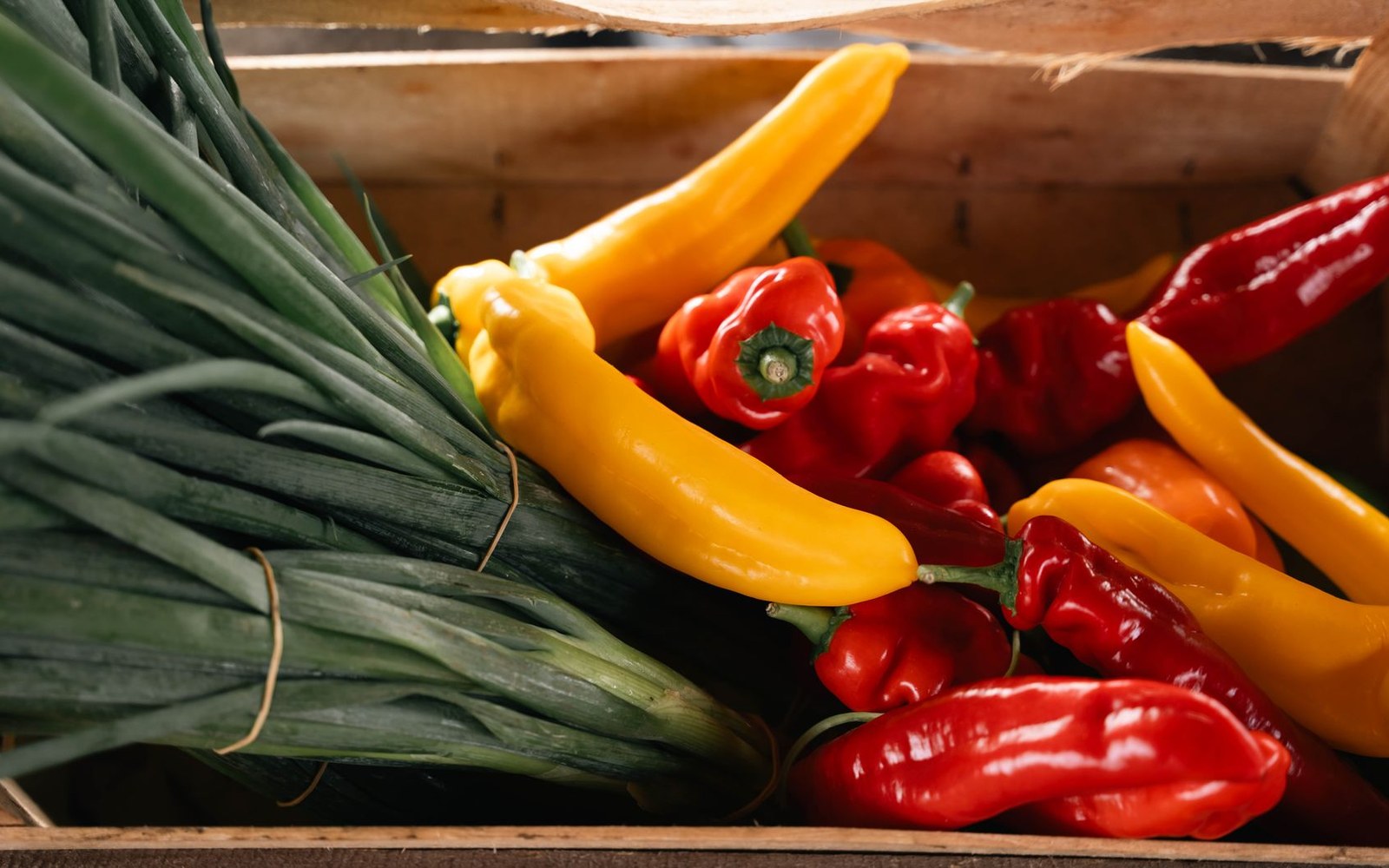
The fields immediately around it still grow the valley's own chile.
Photo: Viridiana Rivera / Pexels

Seed saved from those fields, which is how the strain survived a century of commercial breeding elsewhere.
Photo: cottonbro studio / Pexels
The fields between the Santuario's adobe wall and the river are small by any measure — strips and rectangles bounded by acequia laterals, some no wider than a house lot. What they produce is not volume but specificity: a dark, raisined heat with fruity undertones that reflects the particular chemistry of this ground. The chapel anchored the valley to a pilgrimage economy; the fields anchored it to something older and less ceremonial — the annual obligation to plant, water, harvest and save seed, repeated in the same alluvial soil for longer than any single land-grant or building can document.
Also in Ground