Stacked, Not Rolled — and Eight Other Rules the Enchilada Sets
In New Mexico, the enchilada is not rolled. It is stacked — three blue-corn tortillas laid flat, one atop another, each one pressed under a weight of red or green chile sauce so that by the time the plate reaches the table, the whole construction has begun to surrender at its edges. A fried egg goes on top. This is not a variation on the Tex-Mex standard; it is a refutation of it, and the differences between the two forms are not cosmetic. They are structural, and structure in food is always an argument about priority.
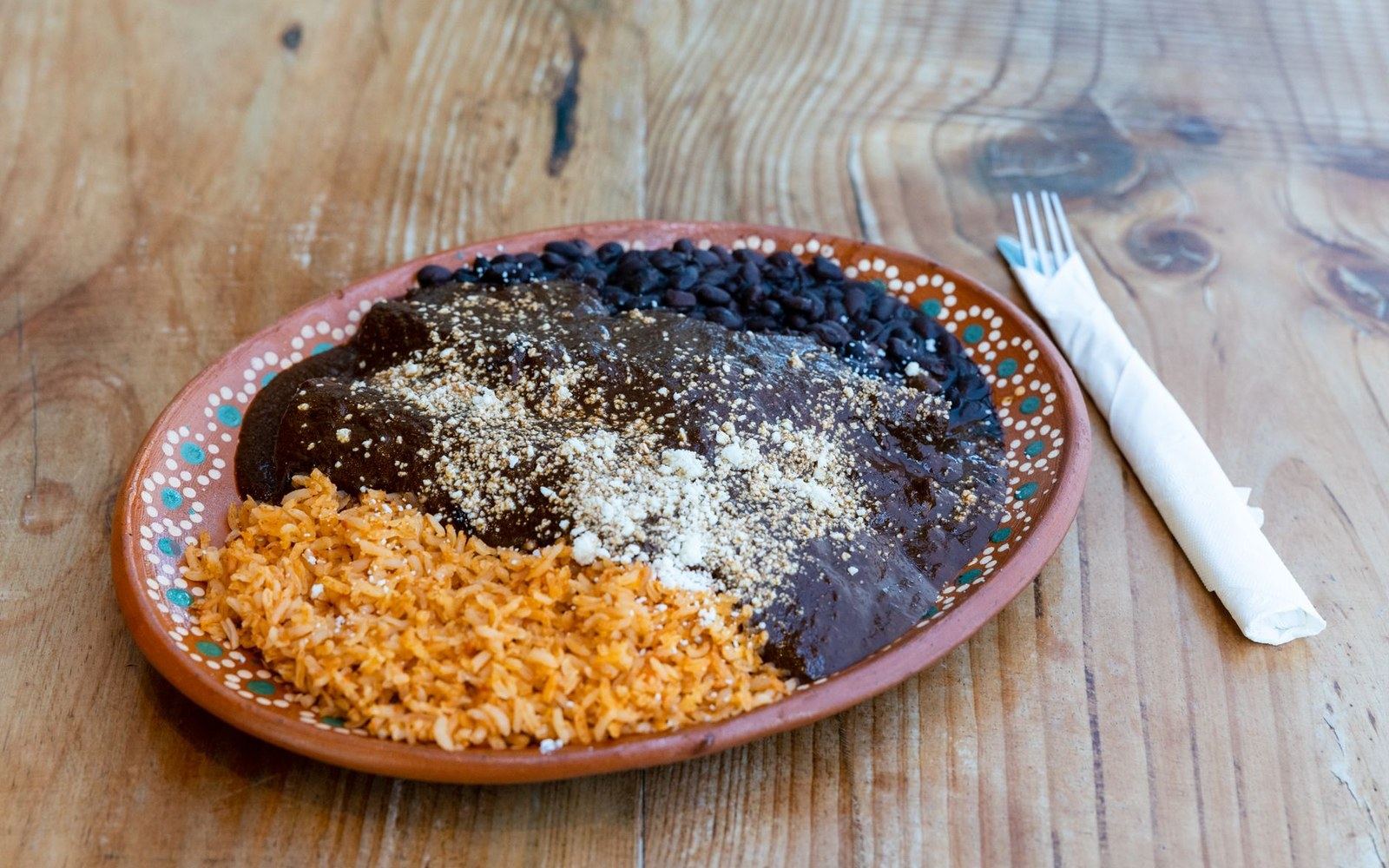
Photo: Snappr / Pexels
The architecture is the argument
The rolled enchilada, dominant in Texas and across most of the country's Mexican-restaurant landscape, is a delivery mechanism: the tortilla is a vessel, its job to hold filling — cheese, onion, chicken, beef — and the sauce is applied afterward, a finishing gesture. The New Mexico stack reverses that logic entirely. Here the chile sauce is the point. The tortilla exists to absorb it, to carry its weight through a short, inevitable softening that is not a flaw but the intended result. A stiff tortilla in a New Mexico enchilada would be a failure.
That distinction demands a tortilla with sufficient body to survive the process without dissolving. Blue corn — the Pueblo-domesticated variety long grown in northern New Mexico — produces a denser, more mineral tortilla than its yellow or white counterpart. Its texture holds up under sauce where a thinner masa would not, and its slightly nutty, earthier flavour does not disappear beneath aggressive chile heat. The choice of blue corn is not nostalgia; it is engineering.
The sauce itself is the second rule, and it is the most consequential. New Mexico's red sauce is built from dried red chiles — locally, often the descendants of the breeding work that Fabián García formalised at what is now New Mexico State University in the early twentieth century — reduced with water or stock into something closer to a pure expression of the pod than any tomato-extended salsa could manage. There is no tomato in the canonical version. Tomato adds acidity and sweetness; its absence is a deliberate refusal of comfort. Green sauce, made from roasted fresh green chiles, operates on the same principle: the chile is the sauce, not an ingredient in one. The state question — "red or green?" — is famous enough to have been codified by the New Mexico Legislature in 1996, but what it is really asking is which expression of the pod you want soaked into your stack.
Rule three is the egg. A fried egg, its yolk runny, placed directly on the topmost tortilla transforms what might otherwise read as a side-dish format into a complete meal. The yolk functions as an additional sauce, cutting the chile's heat with fat and enriching the already-dense layers beneath it. It is also a marker: the egg declares that this is breakfast food, or at any rate that New Mexico declines to observe the boundary. Stacked enchiladas appear at mid-morning as readily as at noon.
Four through nine are briefer but equally firm. The cheese is melted, not baked into a crust — it should yield, not crunch. The onion is raw, scattered between layers, present for sharpness. The plate is never garnished with a flourish of lettuce; lettuce is a Tex-Mex signal, and it is not welcome here. The portion is two stacks or three tortillas per stack, never a single layer — a single layer is a tostada wearing a disguise. The sauce must reach every edge; a dry tortilla corner means the dish was rushed. And the whole assembly is served immediately, because the stacked enchilada does not travel or wait: it is a dish that exists in the ten minutes after it is plated and not much beyond.
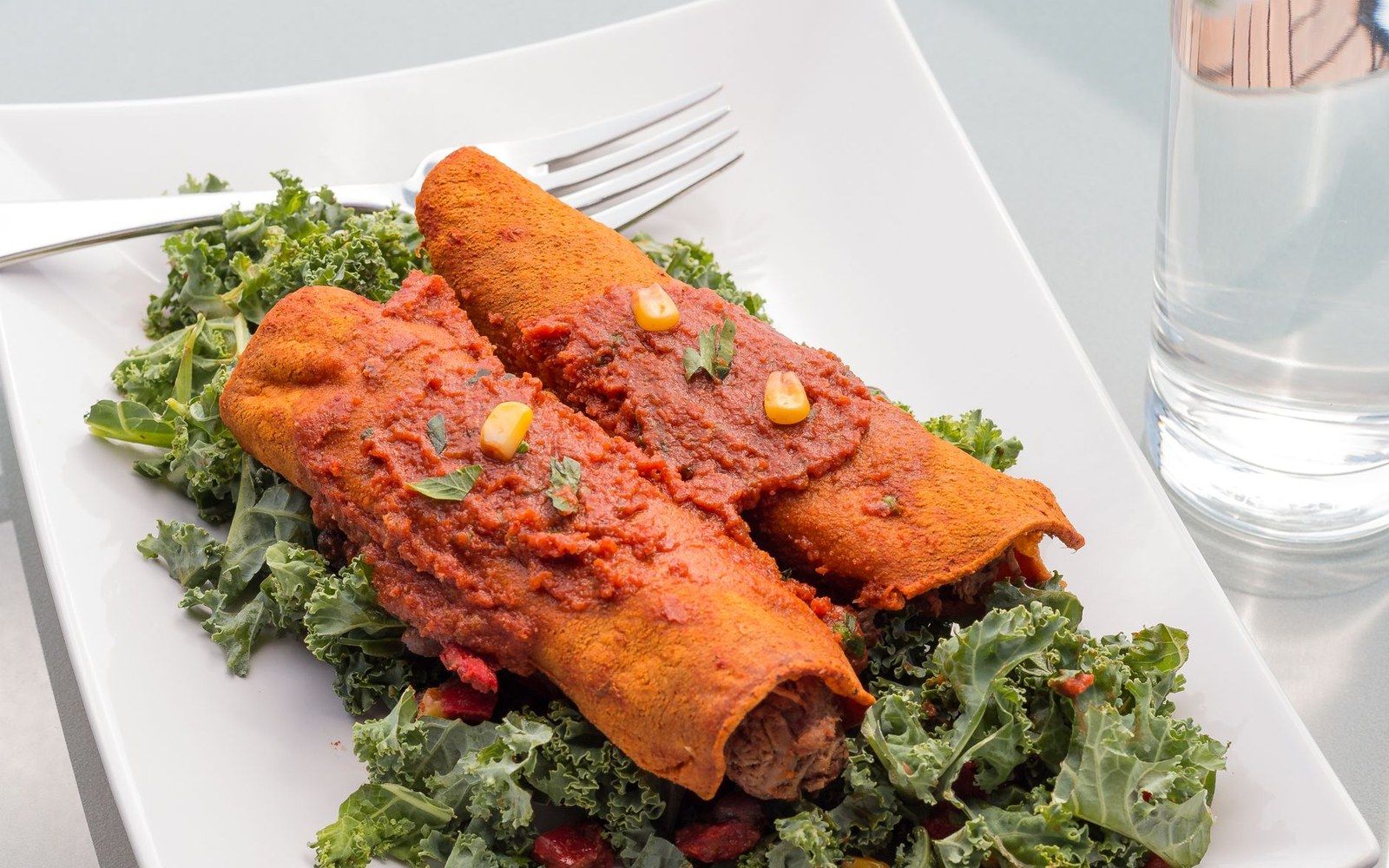
Flat, three tortillas deep, egg on top. Nothing is rolled and nothing needs a knife.
Photo: Loren Castillo / Pexels
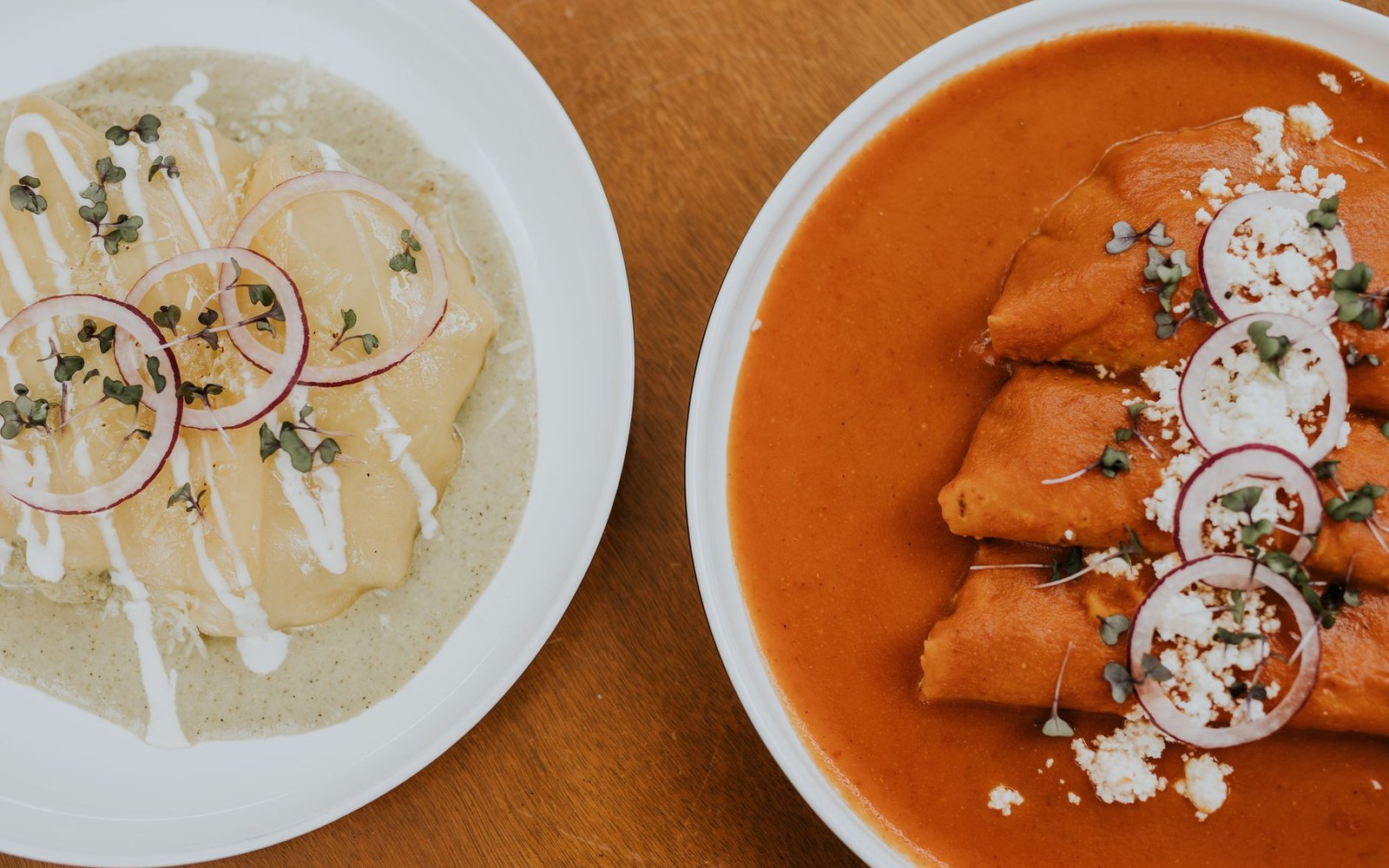
The sauce is the structure. That is why the stack holds where a rolled enchilada would collapse under the same weight.
Photo: Amar Preciado / Pexels
These are not rules invented by any one cook or codified by any authority. They emerged across generations of practice in northern New Mexico kitchens and places like Tomasita's — the kind of informal consensus that food historians recognise ↗ as a regional grammar, built slowly and defended without fanfare. A grammar produces meaning: the New Mexico stack means that the chile is primary, the tortilla is receptive, and the egg is not optional. Everything else follows from that.
Also in Dishes